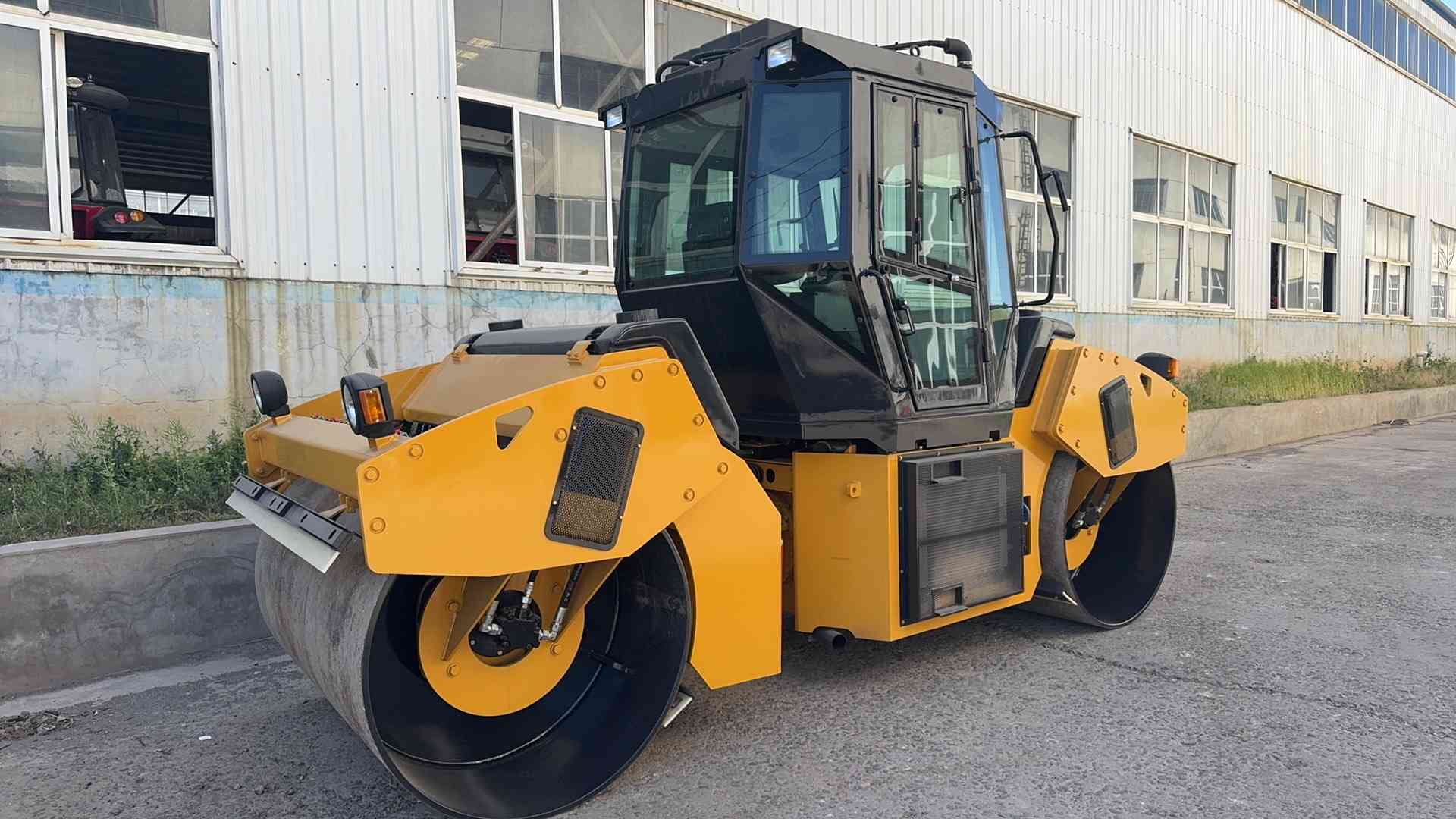
As a core compaction machine in road construction, the double drum road roller achieves efficient compaction of sandy soil, asphalt pavement, and other materials through self-weight and vibration. It's widely used in highways, dam projects, and similar scenarios. Scientific maintenance directly impacts equipment performance and construction quality. Below are maintenance specifications for six major systems to extend the road roller's service life:
Cleaning Cycle: Drain gear oil quarterly under hot conditions, flush the transmission with kerosene at low speed for 2–3 minutes to remove internal debris.
Oil Standard: Use No. 20 gear oil; regularly check oil level and deterioration (replace immediately if oil turns black).
Mechanical Tuning: Calibrate the speed control mechanism and reversing gear positioning device to prevent gear shifting issues; tighten transmission-to-frame bolts to avoid loosening from vibration.
Seal Inspection: Monitor seal surfaces for leakage; replace aged seals promptly to prevent lubricant loss.
Leakage Check: Regularly inspect installation bolts of the oil pump, cylinders, valves, etc., wipe oil stains at joints, and address leaks immediately.
Fluid Management: Monitor level via the oil tank gauge; add filtered No. 68 anti-wear hydraulic oil when insufficient. Clean the tank and replace all oil every 6 months; new oil must pass through a 100-mesh filter.
Filter Maintenance: Clean or replace the hydraulic oil filter element every 500 working hours to prevent debris blockage.
Oil Change Specs: Replace vibration drum lubricant (CD-grade 30 diesel engine oil) every 1,000 hours. When changing oil, rotate the filler port to the upper right until oil dripping reduces, and clean the port area simultaneously.
Leak Detection: Routinely inspect drum housing joints for oil stains; check oil seal condition promptly to avoid bearing damage from lubrication loss.
Travel Bearing: Apply calcium-based grease to grease cups every 20 days of operation to ensure smooth bearing rotation.
Clearance Adjustment: Ensure the three release levers are flush, maintaining a 0.4–0.7mm gap between the main clutch and release bearing, controlled via adjustment screws.
Operation Tips: Engage/disengage smoothly to avoid half-clutch states (prone to friction plate burnout). Depress the pedal fully to disengage and return it to the initial position to fully engage.
Contamination Prevention: Regularly inspect pressure plates and friction plates; prohibit oil penetration (clean contaminated areas with gasoline).
Due to low speed and heavy load, side drives are prone to mud and sand contamination. Clean gear gaps weekly, apply fresh calcium-based grease, and disassemble for tooth wear inspection immediately if abnormal noise or jamming occurs.
Engine Maintenance: Strictly follow the OEM manual for replacing three filters (air, diesel, oil), cylinder pressure detection, etc. Preheat for 3–5 minutes before cold starts.
Lubrication Points: Use pressure-resistant lithium-based grease for hinges and steering cylinder ends; apply general grease to other parts, following the equipment lubrication chart (recommended inspection every 50 working hours).
Cycle Visualization: Create a maintenance calendar to mark system servicing deadlines and avoid omissions.
Oil Adaptation: In cold regions, switch to low-viscosity hydraulic oil (e.g., No. 46 low-temperature anti-wear type) to prevent fluid solidification.
Fault Prediction: Monitor abnormal signals (e.g., reduced vibration, unusual noise) and use hydraulic oil ferrography analysis to detect component wear in advance.
Standard maintenance can reduce double drum road roller failure rates by 40% and extend key component life by over 50%. Construction enterprises should establish equipment files to record maintenance data, shifting from reactive repairs to preventive maintenance for maximum ROI.